
The fastest way to sleep in hot weather is to reduce heat in the room before bed, keep your body as cool and dry as possible, and avoid adding warmth with heavy bedding or late-night cooking. Use fans to move air, close blinds in the day, take a lukewarm shower before bed, and wear loose cotton or moisture-wicking sleepwear. If it’s still too hot, cool your pulse points with a damp cloth or ice pack wrapped in fabric.
What it is: sleeping in hot weather means managing heat, not just getting comfortable
 This image was generated by AI
Trying to sleep in hot weather usually means dealing with a bedroom that won’t cool down, sweaty bedding, and a body that stays alert when it’s overheated. Most people sleep best around 60 to 67°F, or about 16 to 19°C, so once your room climbs well above that range, falling asleep gets harder. The goal is to lower the temperature you feel, not just wish for a cooler night.
How to do it: cool the room, cool your body, and keep the bed light
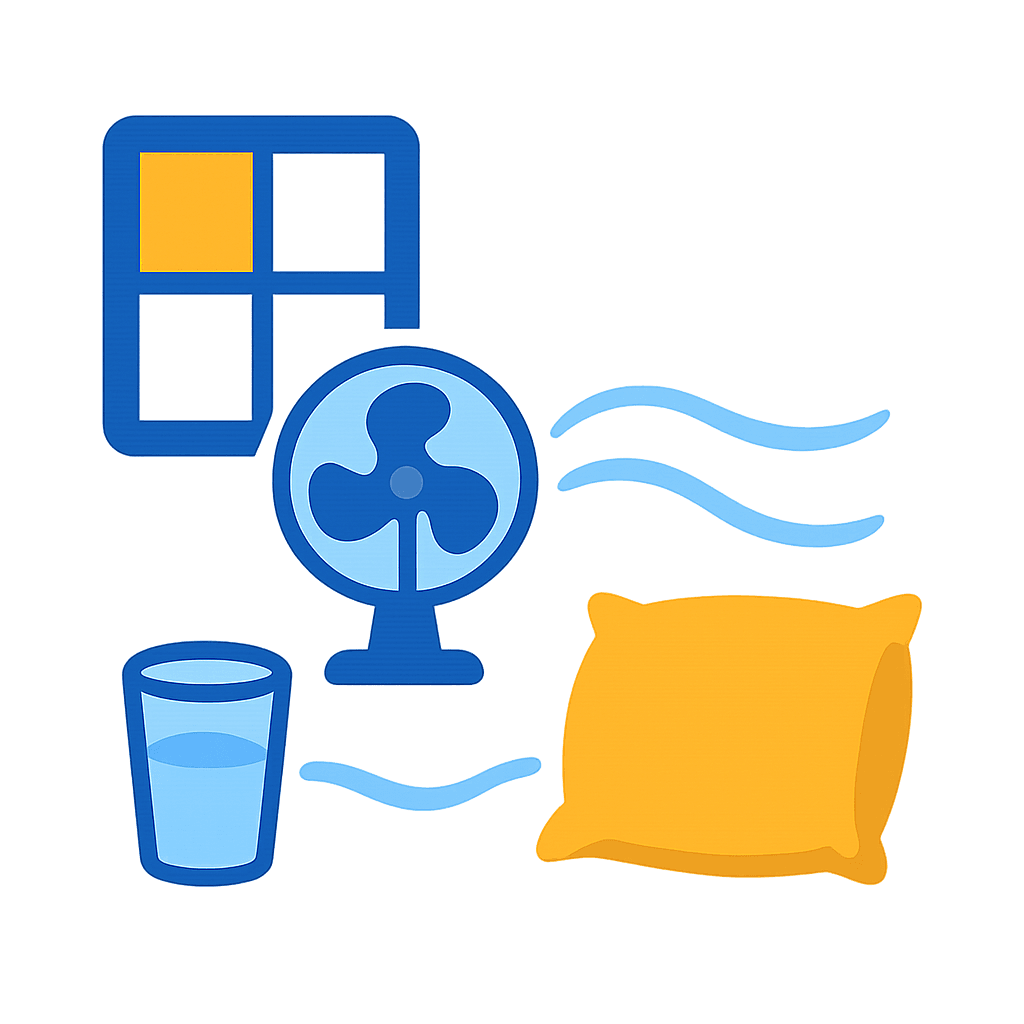 This image was generated by AI
Block daytime heat: close curtains, blinds, or blackout shades before the sun hits the room. If your windows face strong afternoon sun, keep them covered all day.
Create airflow: place a fan so it pulls cooler air toward you or pushes hot air out of the room. A box fan in the window can help if the outdoor air is cooler at night.
Remove heat sources: turn off lamps, unplug chargers, and avoid oven use or long hot showers right before bed.
Use lighter bedding: switch to a single cotton sheet, percale cotton, linen, or a very light blanket. Skip heavy duvets and memory-foam toppers that trap heat.
Cool your body: take a lukewarm shower 30 to 60 minutes before bed, drink a small glass of cool water, and place a damp cloth on your neck or wrists.
Dress for evaporation: wear loose cotton, bamboo, or moisture-wicking sleepwear; if you sleep better with less on, keep it minimal but comfortable.
If you want the biggest payoff for the least effort, start with the room, then your bedding, then your body. A fan plus closed blinds during the day usually helps more than trying to “tough it out” with the same bedding you use in winter. If you have air conditioning, set it to a practical sleeping temperature rather than blasting it cold; a steady, cool room is easier on sleep than big temperature swings.
| Method | Best for | What to expect |
|---|---|---|
| Fan + closed blinds | Most homes and apartments | Cheapest quick fix; helps air move and blocks daytime heat |
| Lukewarm shower before bed | Feeling sticky or overheated | Lowers skin warmth without the rebound chill of very cold water |
| Ice pack in a cloth | Hot neck, wrists, or feet | Fast relief for a short time; don’t place ice directly on skin |
| Light cotton or linen bedding | Sweaty sleepers | Better airflow and less trapped heat than thick synthetic bedding |
| Window opening at night | Cooler evenings | Works only if outdoor air is actually cooler than indoors |
Comparison and alternatives: choose the cooling method that fits your home
Not every hot night needs the same solution. Some people need faster body cooling, while others need to stop the bedroom from turning into a heat trap. Here’s how the common options compare in everyday use.
| Option | Approx. cost | Pros | Cons |
|---|---|---|---|
| Box fan | $20–$40 | Cheap, easy to move, good for airflow | Doesn’t actually cool the air |
| Tower fan | $40–$120 | Quiet, slim, good for bedside use | Usually less powerful than a box fan |
| Portable AC | $250–$700+ | Real cooling for one room | Noisy, pricier, needs venting |
| Blackout curtains | $20–$80 | Stops daytime heat from building up | Only helps if you close them early |
| Cooling mattress pad | $30–$200 | Can reduce hot spots | Results vary; not as effective as room cooling |
If your room is extremely hot, a fan alone may not be enough. In that case, the most effective alternatives are portable air conditioning, a cooler sleep setup in another room, or sleeping lower in the house where heat rises less. Some people also do better with a light cotton sheet and no top blanket at all, especially during a heatwave.
Common mistakes: the things that usually make hot-weather sleep worse
A few common habits can accidentally trap more heat or make you feel more awake. Avoiding these mistakes can be just as helpful as buying a new fan.
Taking a very cold shower right before bed, which can leave you feeling alert instead of sleepy.
Leaving windows open during the day when the outside air is hotter than indoors.
Using thick duvets, fleece blankets, or synthetic sheets that don’t breathe well.
Drinking a lot of alcohol or heavy, sugary drinks late at night, which can worsen dehydration and sleep quality.
Waiting until bedtime to cool the room instead of blocking heat early in the afternoon.
Pointing a fan directly at your face all night if it dries you out or bothers your eyes.
Also avoid overdoing the water. A little cool hydration helps, but chugging large amounts right before bed can wake you up for bathroom trips. And if you’re already sweaty, sticky, and restless, don’t pile on more layers just because the room feels slightly cooler for a moment. Consistency matters more than a quick burst of cold.
Tips: small heatwave changes that can make a big difference
The best heatwave sleep strategy is simple: prevent heat buildup during the day, reduce body heat in the evening, and keep your sleep setup as breathable as possible. If you want the most practical wins, focus on these details.
Close curtains early, before the room heats up.
Use a fan with a bowl of ice nearby only as a short-term boost, not a permanent fix.
Sleep in cotton or linen pajamas, or a light moisture-wicking set if you sweat a lot.
Put your pillowcase or top sheet in the fridge or freezer for 10 to 20 minutes before bed, sealed in a clean bag.
Try cooling pulse points: neck, wrists, ankles, or feet.
Keep a water bottle by the bed, but sip rather than gulp.
If you can, move the mattress lower or sleep in the coolest room in the house.
If the heat is making you feel dizzy, weak, nauseous, or confused, that is more than a sleep problem and may be a sign of heat illness. In that case, cool down immediately and seek medical help if symptoms are severe or worsening.
FAQ
What is the best thing to do when it’s too hot to sleep?
Start by cooling the room with closed blinds and a fan, then cool your body with a lukewarm shower, light bedding, and breathable sleepwear.
Should I sleep with a fan on in hot weather?
Yes, a fan often helps by moving air and making sweat evaporate faster. It won’t lower the room temperature, but it can make sleep more comfortable.
Is it better to shower before bed if it’s hot?
Usually yes. A lukewarm shower 30 to 60 minutes before bed can help you feel cooler without the wake-up effect of icy water.
What should I wear to sleep in a heatwave?
Loose cotton, linen, or moisture-wicking sleepwear works best. Choose light colors and avoid heavy or tight fabrics that trap heat.
Do blackout curtains really help you sleep in hot weather?
Yes. They can block sunlight and help stop the room from heating up during the day, which makes a big difference at night.